Expressive Arts

A creative approach to healing that helps you explore emotions, process experiences, and reconnect with yourself beyond words.
Sound like you?
“I know there’s so much inside me, but I don’t have the words for it.”

“Talking about what I’ve been through feels overwhelming or impossible.”

“I feel stuck emotionally, like something wants to come out, but I don’t know how.”

“I’ve tried talking about it, but it doesn’t seem to reach the deeper parts of me.”
Life doesn't have to stay this way. We can help!
Sometimes experiences are too complex, painful, or deeply rooted to be fully understood through words alone. You may find yourself feeling emotionally blocked, disconnected, or overwhelmed when trying to talk about what you’ve been through. Even when you understand things intellectually, your feelings may remain tangled, unexpressed, or unresolved.

Expressive Arts Therapy offers another way in. Instead of relying solely on conversation, this approach invites creativity, symbolism, and imagination to help you access emotions, memories, and inner experiences that may be difficult to articulate. It creates space for expression without pressure, helping you move toward clarity, relief, and a deeper connection with yourself.
Artist painting with brushes and vibrant colors

What Is Expressive Arts Therapy?

Expressive Arts Therapy is a trauma-informed therapeutic approach that uses creative expression as a pathway to healing. Rather than focusing on artistic skill or performance, the emphasis is on the process of expression and what emerges through it.

In Expressive Arts Therapy, creativity becomes a bridge between your inner world and conscious awareness. Through nonverbal forms of expression, clients can safely explore emotions, patterns, memories, and beliefs that may be stored beneath the surface. This can be especially helpful for individuals who feel stuck in talk therapy, struggle to verbalize their experiences, or feel disconnected from their emotions.

This modality is grounded in the understanding that healing does not always happen through logic or language alone. By engaging creativity within a therapeutic relationship, Expressive Arts Therapy supports emotional regulation, insight, self-compassion, and integration.

At Creating Space Therapy, Expressive Arts Therapy is offered by trained clinicians within a safe, supportive, and client-centered environment. The work is paced carefully and adapted to your comfort level, ensuring that expression feels contained, respectful, and empowering.

What to Expect in an Expressive Arts Therapy Session

Expressive Arts Therapy sessions are guided by your therapist and shaped by your unique needs, goals, and readiness. You do not need to be creative or have any artistic background to benefit from this work.

Early sessions focus on building safety, trust, and emotional grounding. Your therapist will help you feel oriented and supported, introducing expressive elements only when it feels appropriate. The focus is always on your experience, not on creating something “right” or “beautiful.”

As therapy unfolds, creative expression may be used to explore emotions, memories, or internal experiences in a way that feels less overwhelming than direct conversation. Your therapist helps you reflect on what emerges, supporting insight, emotional processing, and integration.

Sessions remain collaborative and flexible. You are always in control of your pace and participation. Expressive Arts Therapy is not about pushing into difficult material, but about allowing meaning and healing to emerge organically.

How Do I Know If I Need Expressive Arts Therapy?

Expressive Arts Therapy may be a good fit if traditional talk therapy feels limiting or if you sense that there is more beneath the surface waiting to be explored.
You struggle to put your emotions or experiences into words
You want a gentler, more intuitive way to process experiences
You feel drawn to creative or symbolic forms of expression
Talking about your past feels overwhelming or shuts you down
You feel emotionally blocked, numb, or disconnected
You carry unresolved grief, trauma, or stress
It may feel uncertain now, but healing doesn’t have to happen through words alone. There are other ways to understand yourself, release what you’re holding, and move forward with greater ease and self-compassion.

Our Compassionate Approach to Expressive Arts Therapy

At Creating Space Therapy, Expressive Arts Therapy is grounded in safety, attunement, and respect for your nervous system. Creativity is never forced and is always used in service of healing, not performance.

Client-centered and trauma-informed

Your therapist adapts the work to your emotional capacity and readiness. Expression unfolds gradually, with careful attention to safety and regulation.

Integrated care

Expressive Arts Therapy may be used on its own or integrated with other therapeutic approaches, supporting emotional regulation, insight, and long-term healing.

Process over product

There is no pressure to create something specific or meaningful right away. The value lies in the experience itself and what it reveals.

How Expressive Arts Therapy Can Help

01

Access and express emotions safely

Creative expression allows emotions to surface without requiring precise language, reducing overwhelm and increasing emotional awareness.
02

Process experiences stored beneath words

This approach can help you explore memories and feelings that may be difficult to reach through conversation alone.
03

Build self-compassion and insight

As expression unfolds, many clients develop a deeper understanding of themselves and a kinder relationship with their inner world.
04

Restore a sense of connection and agency

Engaging creativity within a therapeutic space can help you feel more present, grounded, and empowered in your healing process.

Our Expressive Arts Therapists

Our therapists who offer Expressive Arts Therapy are trained to integrate creativity into clinical, trauma-informed care. They approach this work with sensitivity, curiosity, and deep respect for each client’s process.

Using expressive arts within therapy allows them to meet clients where they are, offering alternative pathways to healing when words feel insufficient. Whether you are working through trauma, grief, emotional blocks, or identity exploration, our therapists provide steady support, guidance, and containment throughout your journey.
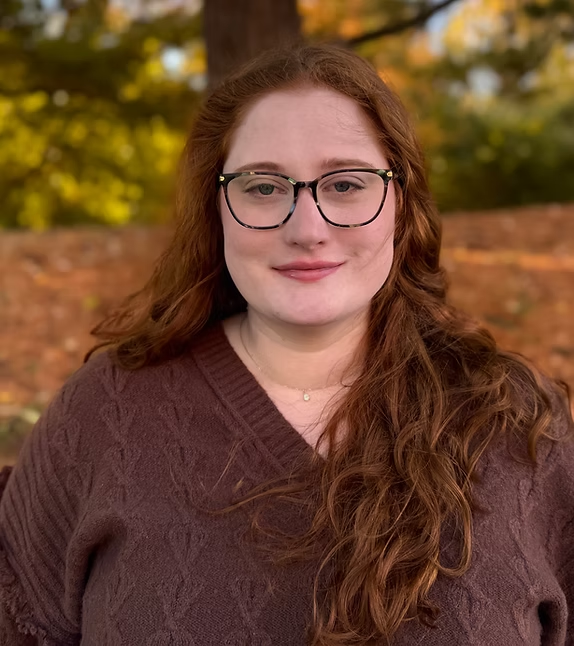
Woman outdoors in autumn scenery, wearing glasses.
Emma Rooney
Licensed Professional Counselor (LPC)

Smiling woman sitting on a chair indoors
Kelly Huggins
Licensed Clinical Social Worker (LCSW)
Partnering With Your Primary Therapist
Using Expressive Arts Therapy as Adjunctive Care
Expressive Arts Therapy can also be used alongside ongoing therapy to support deeper processing and emotional integration. When certain experiences feel stuck or difficult to articulate, expressive work can help unlock new insights and movement.

Our therapists collaborate thoughtfully with primary therapists when appropriate, ensuring that expressive work complements and enhances your existing therapeutic goals rather than replacing them.
Still unsure about Expressive Arts Therapy? We understand.
Trying a creative approach to therapy can bring up questions or hesitation, especially if it feels unfamiliar. At Creating Space Therapy, your comfort and consent always come first. You are never required to engage in any activity that doesn’t feel right for you.

Expressive Arts FAQ

You don’t need to be creative or artistic to benefit from Expressive Arts Therapy. This work is not about talent or making something “good.” It’s about expression and exploration. Many clients come in believing they are not creative and discover that creativity shows up naturally when pressure is removed.

No. You are always in control of what you share. Sometimes the process itself is enough, and sometimes reflecting on what emerged can be helpful. Your therapist will follow your lead and respect your boundaries at all times.

Yes. Expressive Arts Therapy is often helpful for trauma and grief, especially when experiences feel difficult to put into words. Creative expression can gently access and process emotions stored beneath conscious language, supporting healing without forcing verbal retelling.

Absolutely. While expressive approaches are often associated with children, many adults find this modality deeply supportive. It can be especially helpful for those who feel stuck in talk therapy or want a more intuitive, body- and emotion-centered approach.

Your therapist is trained to help you stay regulated and supported. Expressive work is introduced gradually and paced carefully. You can pause, shift focus, or stop at any time. Safety and emotional containment are always prioritized.

Yes. Expressive Arts Therapy is often integrated with other trauma-informed approaches, including EMDR, somatic therapy, and talk therapy. It can deepen insight, support emotional regulation, and enhance overall therapeutic progress.

You Deserve a Way to Heal That Fits You
Healing is not one-size-fits-all. If words have felt limiting or insufficient, Expressive Arts Therapy offers another way to listen to yourself, process experiences, and move forward with greater clarity and compassion.

At Creating Space Therapy, we honor the many ways healing can unfold. Our therapists are here to support you with care, creativity, and respect, helping you reconnect with yourself in a way that feels authentic and safe.

You don’t have to force your healing into words. We’re here to create space for whatever wants to emerge.
ALL RIGHTS RESERVED
©
2026
Creating Space Therapy PLLC
Expertly designed with love by Addelise Design